
How Weather Affects Golf Ball Flight and Strategy
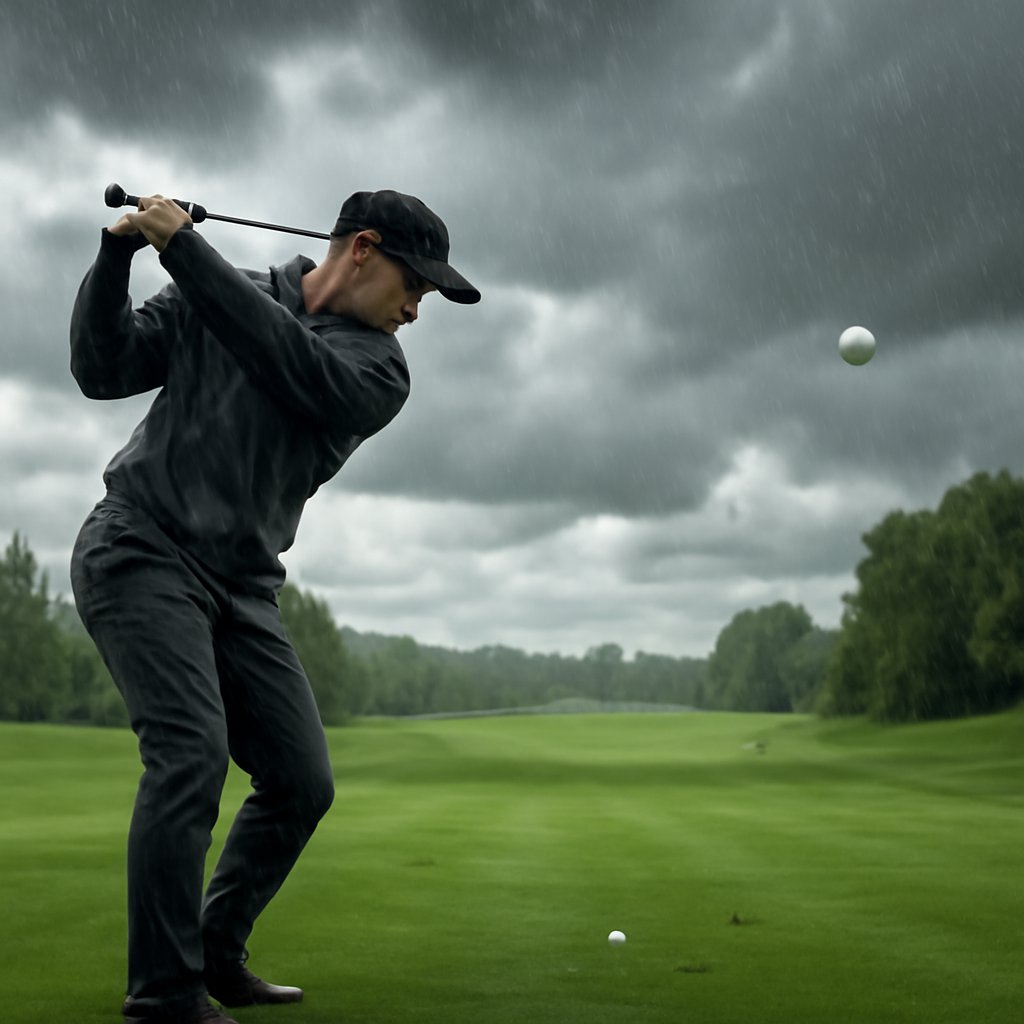
There’s something magical about the way weather wraps itself around a golf course, turning what you thought was a familiar round into a full sensory adventure. I’ve felt that shift on links from coastal Scotland to the humid fairways of the American South, where the air itself seems to decide how far your ball will carry. Understanding these variables isn’t just technical—it’s about reading the breeze on your face or the heaviness in the morning mist to make smarter choices with every club.
Wind hits first and hardest, reshaping your ball’s path in ways that demand instant respect. A headwind adds drag and lifts the shot higher, stealing distance, while a tailwind lets it sail with extra roll. Crosswinds spin the ball sideways, and pros on every tour, including those I admire on the LPGA, constantly recalibrate. When I played the Old Course at St Andrews one blustery spring, the swirling gusts forced me into low, boring trajectories just to stay under the gusts—exactly the approach players like Collin Morikawa and Jon Rahm use when winds top 25 mph along the coast. Caddies pace wind from multiple angles, and amateurs can practice the same by watching flags or trees. In the 2023 PGA Championship at Oak Hill, contenders switched irons by two clubs into headwinds on par-3s; I’ve adopted punch shots in similar conditions to keep control.
Understanding wind dynamics goes deeper than just feeling the breeze. Professional golfers use what’s called the “rule of 12” to estimate wind impact: divide the wind speed in miles per hour by 12 to determine the approximate distance in feet the ball will move sideways per 100 yards of flight. For a 24 mph crosswind, that’s roughly two yards of drift per 100 yards. But beyond mathematics, reading the wind requires observing multiple indicators—flag movement at different heights, dust or sand patterns, ripples on water hazards, and even how trees bend at various levels. Many PGA Tour pros actually aim for spots where they expect the wind to push their ball toward the target, rather than fighting it with a heroic swing. This acceptance-based approach, rather than pure correction, often yields better results and more consistent scoring.
Temperature and humidity alter the air’s density in subtle but powerful ways that change everything from carry to how the ball settles on greens. Hot, humid days mean less resistance and longer flights, while cold, dry air packs the ball down. A 20-degree Fahrenheit drop can cost 10-15 yards off the driver, something players monitor closely. At Augusta National during the Masters, the humidity keeps approaches stopping quicker, shifting strategy toward softer landings. Dustin Johnson has mentioned adding club in cool U.S. Open mornings, and Scottie Scheffler leans on launch data for adjustments. Warming up properly in chillier weather preserves swing speed, and lower-compression balls help. Altitude adds another layer—at high-elevation spots like the Mexico Open, thinner air stretches drives noticeably, inviting more aggressive lines off the tee.
The barometric pressure itself plays a significant role that many casual golfers overlook. Low pressure systems—typically associated with stormy weather—actually allow the ball to carry slightly farther because the air is thinner. Conversely, high-pressure systems create denser air that reduces carry distance. Professional meteorologists who work with tour operations have noted that a drop of just one inch of mercury in barometric pressure can add roughly one to two yards to driver distance. This explains why some days feel like your ball is “flying” even without obvious tailwinds, and why other seemingly perfect days feel sluggish. Checking weather apps that display pressure readings before your round gives you one more data point for club selection and distance expectation.
Rain introduces a completely different dynamic that affects both the golf ball and course conditions. When moisture saturates the course, the ball spins differently off wet grass—typically less off the tee but potentially more on approach shots depending on club selection and strike quality. Wet fairways reduce roll significantly, often by 20-30%, which means what would normally be a drive-and-pitch becomes a full two-shot hole. The 2019 Open Championship at Royal Portrush proved this dramatically, where sustained rain turned the course into a precision instrument rather than a power contest. Players who excel in wet conditions tend to emphasize accuracy over distance, accepting that they’ll hit one extra club on approaches and planning their course management around minimal roll. Additionally, wet conditions make certain lies treacherous—a ball sitting in thick rough after rain becomes nearly impossible to control, so bailout strategies become even more critical.
These elements shine brightest in major championships, where conditions evolve over four rounds. Rain softens everything, cutting roll and boosting spin so players attack pins with precision rather than power. The 2019 Open at Royal Portrush turned into a patience test with heavy downpours favoring accurate irons. Events like the Players Championship at TPC Sawgrass bring lightning delays that break rhythm, calling for mental resets and conservative play afterward. Successful golfers pack varied balls for wet or dry lies and practice knockdowns or floaters. Course management shifts toward safer lay-ups in tough weather, a lesson echoed from Jack Nicklaus navigating British links to Rory McIlroy thriving in flux. I always check forecasts and arrive early to watch how the course reveals itself under the day’s conditions.
Fog and reduced visibility create their own strategic considerations that extend beyond simply seeing the ball flight. On courses shrouded in morning mist, visibility can be limited to 100-150 yards, forcing players to trust yardage markers and commit to swing paths without the visual feedback they normally rely on. This psychological element often leads golfers to play more conservatively, taking extra club to ensure they clear hazards they can’t fully see. Par-3s become especially challenging because the landing area disappears from view. Some tour professionals actually prefer these conditions because they force reliance on swing mechanics rather than visual adjustments, but most amateurs need to consciously manage the mental side by trusting their pre-shot routine more completely.
As someone who follows the LPGA closely, I’ve noticed the same adaptability in players there, where versatility turns challenging weather into an edge. Women’s professional golf has shown remarkable skill in reading conditions, partly because the lighter ball flight means weather variables impact their shots proportionally more. Players like Patty Tavatanakit and Nelly Korda frequently discuss how they adjust not just club selection but also swing technique based on atmospheric conditions. This heightened sensitivity to weather actually makes LPGA players excellent teachers for amateurs trying to understand subtle condition changes.
Here are the key facts that ground these observations:
– Every 10-degree Fahrenheit temperature decrease reduces driver distance by approximately 2-3 yards due to increased air density.
– Wind speeds above 15 mph can alter effective club selection by one to two clubs on approach shots for PGA Tour professionals.
– High humidity levels above 70% can add up to 5-7 yards of carry on well-struck drives compared to dry conditions.
– In the 2022 U.S. Open at Brookline, cold and windy weather led to scoring averages nearly two strokes higher than practice rounds.
– Altitude gains of 1,000 feet above sea level typically increase ball flight distance by 3-5% for most golfers.
– Studies of PGA Tour data show players adjust launch angles downward by 2-4 degrees in headwinds exceeding 20 mph to maintain control.
– Barometric pressure changes of one inch of mercury correlate with approximately one to two yards of distance variation in driver performance.
– Wet conditions reduce fairway roll by 20-30% on average, fundamentally changing hole strategy and club selection patterns.
Practically speaking, developing a pre-round weather routine separates consistent golfers from those who accept poor scores as inevitable. Before teeing off, spend five minutes observing wind patterns at different heights, checking temperature, and noting humidity levels if available. This isn’t wasting time—it’s gathering intelligence that directly impacts every decision you’ll make for the next four hours. On your range session, hit extra shots in your current conditions rather than theoretical perfect conditions. If it’s cold, focus on smoother swings that preserve tempo rather than forcing tempo. If it’s windy, practice low trajectory shots and deliberate shot shapes. If humidity is high, embrace the extra distance but don’t let it lead to overconfidence on approach shots where precision matters more than power.
Mastering weather’s influence on ball flight and strategy elevates the game for everyone, from local club rounds to the biggest stages. By tuning into wind, temperature, and humidity, you make decisions that