
Collin Morikawa Iron Play Mastery Explained
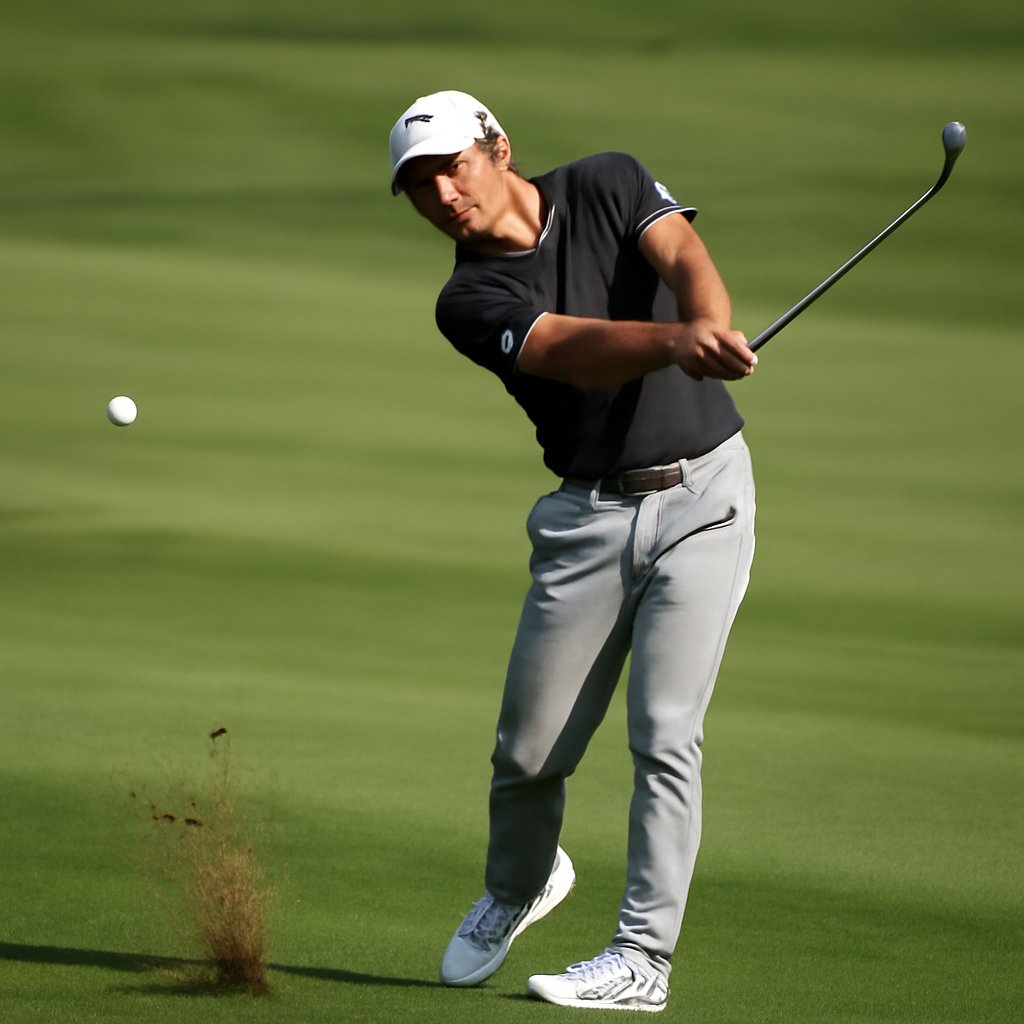
Collin Morikawa’s iron play is the kind of stuff you study frame-by-frame if you’re serious about ball-striking. The two-time major winner sits near the top of the Tour in approach play year after year, carving out scoring chances that leave most of the field chasing. He controls distance, works the ball both ways, and finds the green from lies that would make plenty of guys flinch.
His foundation starts with a neutral grip and a setup that keeps everything centered—no big sway or lunge. Slight knee flex, weight balanced, hands just ahead of the ball on mid-irons. That little forward press sets up the downward strike you need to compress it properly. I’ve played enough rounds to know most amateurs never get that shaft lean right and end up flipping at it instead.
Alignment is dead parallel to the target line, ball positioned a touch forward, and he keeps the motion compact on the backswing with almost no extra wrist action. Transition stays smooth, lower body clears first, and the club stays on plane. That sequence is what lets him repeat it under pressure.
What makes Morikawa’s approach so different from other top-tier ball-strikers is his unwavering consistency across different club selections. Whether he’s working a 4-iron into a tight par-4 or threading a 7-iron between bunkers, the fundamentals remain identical. His takeaway is remarkably quiet—minimal hip turn, controlled arm movement, and the club face stays square throughout. This simplicity is deceptive; it’s the result of thousands of hours of deliberate practice aimed at reducing variables and maximizing repeatability.
Distance control comes from subtle hand position changes rather than swinging harder or shorter. He can flight it low into the wind or hang it high with spin when the greens are firm—exactly what separates him when pins are tucked. Compression is the real hallmark: shallow attack angle plus forward shaft lean at impact produces that penetrating flight even from rough or fairway sand. As a former club pro, I can tell you that feel for yardage is what turns good iron players into great ones.
Morikawa’s approach to distance control is particularly instructive for weekend golfers. Rather than relying on full swings, he employs what’s known as a “stock shot” mentality—a repeatable swing that produces consistent distances with each club. For his 7-iron, for example, he has a predetermined distance he knows he can hit under normal conditions. Adjustments come through minor alterations in setup and club selection, not dramatic swing changes. This reduces the mental load during competition and keeps him locked into his process.
The short iron game is where Morikawa’s precision becomes almost surgical. With clubs from 8-iron through pitching wedge, he’s deadly accurate from 100 to 175 yards—distances that represent crucial scoring zones on the PGA Tour. His ball-striking data shows he gains nearly 0.3 strokes per round just on short irons compared to the Tour average. That might not sound like much until you realize it compounds over 72 holes and becomes the difference between winning and finishing fifth.
Morikawa works the ball on command without changing his swing speed. Draw or fade around a bunker? He just sets the face and path and goes at it. That’s why he can attack tucked pins while others bail out to the middle of the green. This shot-making ability isn’t innate—it’s developed through intentional practice. During range sessions, he’ll pick specific targets and shape shots at will, building confidence in his ability to execute under tournament stress.
His understanding of spin rates and launch conditions also sets him apart from the field. Morikawa has spent considerable time understanding how different swing speeds, shaft selections, and impact locations produce varying ball flight characteristics. This technical knowledge allows him to dial in exactly the trajectory and spin rate needed for each shot. When the wind picks up, when greens firm up, or when he needs a specific trajectory to stop a ball quickly, he has the tools and knowledge to adjust accordingly.
You saw it at the 2020 PGA at Harding Park when he hit 18 of 22 greens in the final round. Same story at the 2021 Open at Royal St. George’s—windy links conditions, and he still carved it close. Those weeks proved the technique holds up when it matters. At Royal St. George’s specifically, Morikawa’s iron play under extreme conditions was exceptional. Links golf demands precision and imagination; the rough is thicker, the wind more treacherous, and the greens firmer and faster. Yet he managed to keep the ball in play and approach the pin with regularity, a testament to both his skill and his course management acumen.
Course management deserves special emphasis when discussing Morikawa’s success. He doesn’t just hit the best shots; he hits the right shot for the situation. If a pin is protected by bunkers and rough, Morikawa will often aim for the center of the green rather than attack it. This conservative approach might seem at odds with his aggressive reputation, but it’s actually the mark of a true professional. He understands that a two-putt from 30 feet is better than chipping from the rough. This balance between aggression and prudence is something many amateur golfers struggle with.
Another element worth noting is how Morikawa manages his mental game during iron shots. He employs a pre-shot routine that’s identical on every shot, which helps calm nerves and keep him focused on process rather than outcome. The routine includes reading the yardage, assessing wind and slope, selecting his target, and visualizing the shot before execution. This methodical approach is the same one you’ll see in other major winners and top-ranked players.
Drills that work? Alignment sticks to groove path and face, plus distance ladders with a mid-iron to build that yardage feel. Nothing fancy, just repetition that matches what he does on the range. Beyond alignment sticks, Morikawa also benefits from launch monitor feedback. Understanding ball flight numbers—launch angle, spin rate, smash factor—provides objective data that helps refine technique. Most amateurs can’t replicate this at their local range, but the principle remains: gather feedback, make adjustments, and practice with purpose.
A practical drill for improving your own iron play mirrors what Morikawa does: pick a specific distance—say 150 yards with your 6-iron—and hit 20 balls to a target. Note where they land. Repeat this process with different clubs and distances until you develop a feel for your own yardages. This builds the same distance control that Morikawa uses on the course.
The numbers back it up: inside the top 10 in strokes gained: approach four of the last five seasons, 1.85 strokes gained per round on approach during that PGA win, leads greens in regulation from 175-200 yards in multiple years, and his proximity from 150 yards sits top-five annually. Eleven PGA Tour wins, two majors, and the lowest average approach distance to the pin in several major fields. These statistics aren’t flukes—they represent consistent, measurable excellence across varying conditions and competition levels.
Morikawa’s success on the PGA Tour has also been bolstered by his calm demeanor under pressure. During critical moments in tournaments, he doesn’t rush. His pre-shot routine remains the same whether he’s playing the 3rd hole or closing out a major championship. This emotional control translates into better decision-making and more reliable execution when it matters most.
Focus on the setup, the sequence, and smart course management and you’ll start seeing the same kind of control. His iron work remains the benchmark for anyone trying to tighten up their ball-striking. Whether you’re a serious amateur or a club golfer looking to lower scores, there’s something to learn from every aspect of Morikawa’s approach game.