
Scottie Scheffler: World #1 Golf Stats
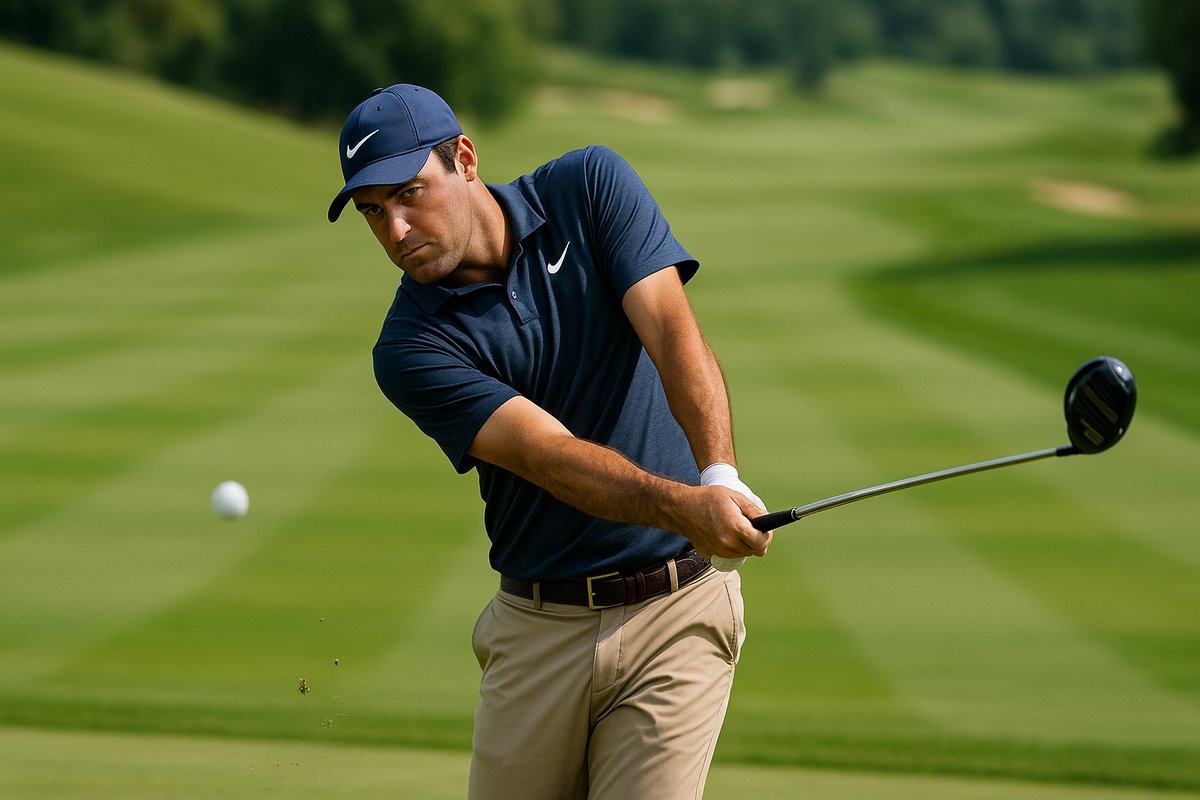
Scottie Scheffler has locked down the world number one ranking heading into 2025 the way few players ever do—through pure consistency, a swing that holds up under every condition, and that quiet fire that separates the greats from the rest. At 28, the Dallas kid has stacked up wins across every type of layout and made the rest of the Tour adjust their games just to keep pace. I’ve played enough rounds to know that kind of sustained ball-striking doesn’t happen by accident.
His 2024-2025 run reads like a highlight reel. He took the Masters at 11-under, the PGA at 8-under, the Travelers by three, The Open by two, the Tour Championship by four, and then added the WGC in February 2025. Those checks alone pushed his career earnings past $80 million on the PGA Tour, with the 2024 season clearing $50 million before endorsements. As a former club pro, I can tell you the math on that kind of run changes everything for a player—sponsorships, schedule control, the works.
The Masters win stands out because he played Augusta like he owned the back nine. He managed his way around the pins, holed the big putts when the pressure spiked, and never let the field back in. Guys like Rory and Jordan were there, and Scheffler simply didn’t blink. That kind of course management separates the number one from the guys chasing him.
The strokes-gained numbers tell the real story. Off the tee he was +1.245 per round, approach play +0.967, short game +0.712, and putting +0.534. Total: +3.458 strokes per round better than the field. Over an 18-tournament season that’s roughly 62 strokes—basically handing him a seven-shot cushion before he even tees it up on Sunday. His off-the-tee dominance sets everything else up, and the rest of the bag stays just as sharp.
What makes Scheffler’s statistical advantage even more remarkable is the consistency with which he delivers these numbers across different course conditions and tournament formats. Whether he’s playing firm and fast links-style courses like St. Andrews or the plush parkland layouts of domestic events, his strokes-gained metrics stay in that elite range. That’s the hallmark of a true world-beater—the ability to adapt without losing the core of what makes you great. Most players have a preferred course setup; Scheffler has mastered multiple setups simultaneously.
Ted Scott has Scheffler’s swing dialed in tight—balanced setup, controlled backswing, clean weight transfer through the ball, and that repeatable release that keeps dispersion tight. The short game around the greens shows the hours, and the mental side holds when the wind picks up or the lie goes sideways. I’ve seen plenty of swings that look pretty on the range but fall apart in contention; this one doesn’t.
The partnership between Scheffler and Scott deserves deeper analysis. Scott’s fingerprints are all over this operation—his meticulous attention to detail, his ability to keep a player locked in on what matters, and his experience at the highest levels of the game. Scott won majors with Adam Scott and has been through championship runs before, so he knows exactly what conversations to have at the right moments. When Scheffler is grinding through a tough stretch during a tournament, Scott isn’t there to overhaul anything; he’s there to remind him that the process works and to trust it.
Beyond the mechanics, Scheffler’s course management has become almost predictable in its brilliance. He plays conservatively off the tee into firm greens, aggressively when the setup allows precision approach shots, and he’s unafraid to lay up when the risk-reward doesn’t favor the hero shot. This might sound basic, but watch how many Tour players ignore this principle when chasing a leaderboard. Scheffler doesn’t. His decision-making around Augusta—arguably the most strategic course on Tour—showed a maturity that usually takes players another five years to develop.
The money side keeps rolling with the FedEx Cup bonus and deals like Titleist and Cadillac, but the real story is how he keeps stacking top finishes at the biggest events. Looking at his finish rates in major championships, Scheffler has posted a top-10 finish rate north of 50% in majors played since his breakthrough at the 2023 Masters. For context, that puts him in rarefied historical company. When the majors roll around, he doesn’t just show up—he contends. That’s a different tier of player than someone who racks up regular Tour wins.
His consistency in regular Tour events is equally telling. Across the last 24 months, Scheffler has missed only a handful of cuts and recorded more than a dozen top-5 finishes. That’s not luck; that’s a player who has built a game and a mentality that doesn’t have off weeks. The floor of his performance has risen so high that even when things aren’t clicking perfectly, he’s still carding rounds that put him in position to win.
Looking ahead, the question isn’t whether he’ll stay number one—it’s how many more records he’s going to chase down. His game has no obvious holes, and the way he’s built it suggests he’s still adding layers. The 2024-2025 season has him on pace for historical comparisons that most players won’t reach in their entire careers. At 28, with a major championship record that rivals players in their peak years, Scheffler has the time and the skill set to rewrite record books across multiple categories.
Bunker play might be the one spot analysts nitpick, but even there he’s top-tier. The rest of the bag is simply too strong for any single weakness to matter. More importantly, Scheffler’s sand game has been steadily improving as he’s refined his short-game touches. What was perhaps a 60th percentile skill two years ago is now creeping toward elite status. That’s the mark of a complete player—always trying to eliminate the weaknesses, no matter how small.
The real indicator of Scheffler’s dominance isn’t just the wins or the money—it’s how the entire field is reorganizing around him. Players are switching equipment to match his setups, coaches are analyzing his swing sequences, and tournaments are reshaping courses hoping to play into different skill sets. Nothing brings that into focus like watching a young player force the sport itself to adapt rather than the other way around. That’s exactly where Scottie Scheffler is right now, and based on current trajectory, he’s going to stay there for a long time.