
Rory McIlroy Major Wins and Career Statistics
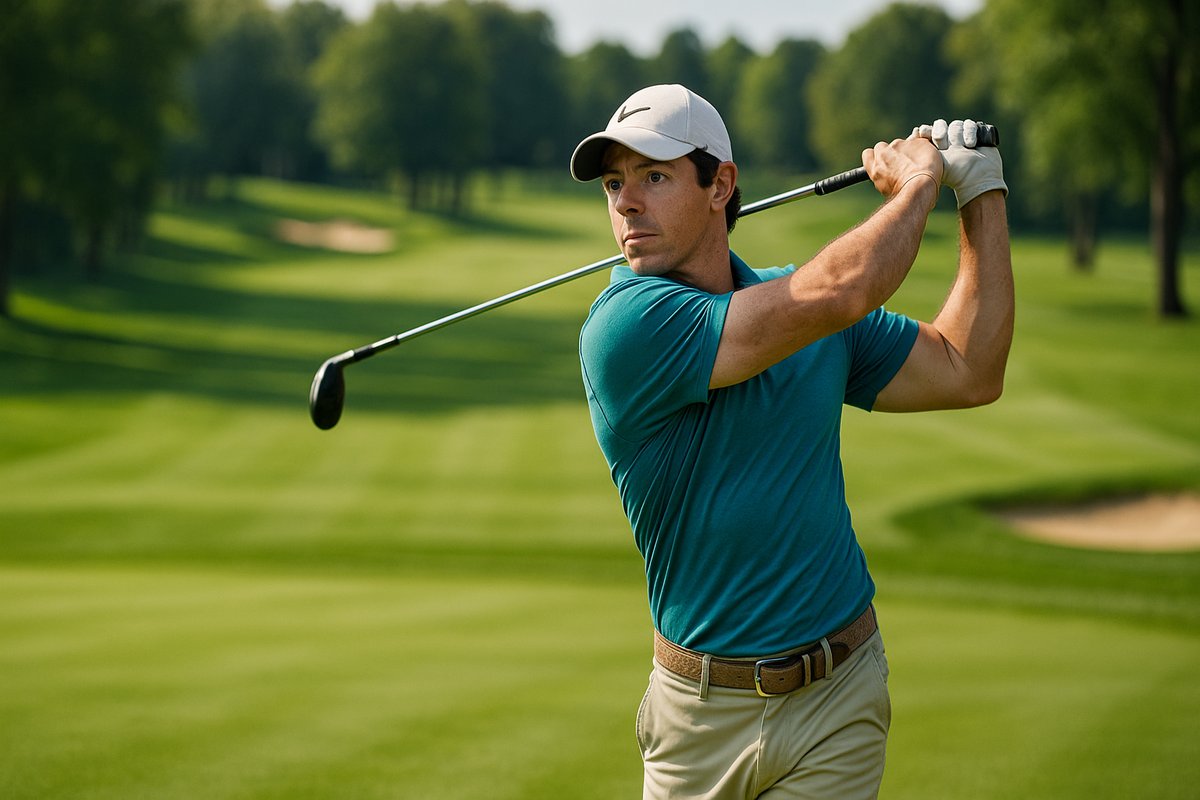
Rory McIlroy’s locked into that consistent excellence groove on the PGA Tour like few others. I’ve watched him turn from that talented kid into a four-time major winner, and his run tells you plenty about grinding it out at the top for more than a decade. As a former club pro, I can tell you staying relevant that long takes more than raw talent.
McIlroy’s bagged four majors total. First one dropped at the 2011 U.S. Open at Congressional, where he flat-out dominated at 22 years old. Then the 2014 Open at Royal Liverpool went wire-to-wire, showing he wasn’t flashing in the pan. He followed with PGA wins in 2016 and 2019, the last one at Bethpage Black during a stretch where his ball-striking was dialed in tight.
Let’s break down those wins technically. At Congressional he posted 16-under, walking away by eight shots with an iron game that separated him from the field. That kind of margin rewires a player’s career path quick. Three years later at Royal Liverpool the numbers were 66-66-69-71 for 272, two clear of Rickie Fowler. Links golf can chew up players who don’t adapt fast, but McIlroy handled the wind and firm turf like he’d grown up on it. The 2016 PGA at Baltusrol was another wire-to-wire job, finishing 16-under two ahead of Justin Thomas. Bethpage in 2019 felt like peak McIlroy again, controlling his lines off the tee and never giving ground.
What makes McIlroy’s major victories particularly impressive is the variety of courses and conditions he’s mastered. Congressional demanded precision approach play into firm greens. Royal Liverpool required that links expertise most Americans don’t develop early. Baltusrol played to his length and accuracy through the field. Bethpage tested his composure under major pressure in front of passionate New York crowds. That adaptability across different course types and playing conditions separates the truly elite from the one-dimensional talents.
His PGA Tour ledger runs from 2010 forward with roughly 35 wins. That’s the kind of total that earns respect even when the majors talk lingers. I’ve played enough rounds to know an all-around game like his keeps you in contention every week. Career scoring average sits between 69 and 69.5, driving distance around 300 yards but always paired with accuracy that sets up wedges. Greens in regulation stayed north of 65 percent in his prime seasons. World number one weeks add up to about 120, not all consecutive, but enough to show he owned the top spot multiple times.
The consistency of McIlroy’s performance extends beyond basic statistics. His ability to manage tournaments across different formats tells you something about his mental approach. Whether chasing leads or protecting them, he’s shown the discipline to stick to process rather than getting caught up in leaderboard watching. That mentality developed through years of competing at the highest level, and you can see it reflected in his scoring consistency year to year.
Missed-cut rate hovers around 5-7 percent across his whole career. When he’s in the field he’s usually ready. Scoring differential stays tight season to season, which means he’s not feast-or-famine like some guys. Top-10 finishes at majors sit near 20, a 33 percent rate that shows he keeps putting himself in position even when the wins don’t come. That strike rate in major championships demonstrates he’s not just occasionally playing well—he’s building a pattern of excellence in the events that matter most.
McIlroy’s evolution as a player offers lessons for serious golfers. Early in his career, he’d occasionally let frustration boil over, particularly when things weren’t going his way. By the time he won at Bethpage, you could see the maturity in how he handled adversity within rounds. He wasn’t trying to make up five shots in two holes. He was playing each shot with intention and letting the score take care of itself. That’s the mark of a player who’s truly learned the game’s mental demands.
The gap between four major championships and what some observers think he should have won creates natural conversation. McIlroy’s finished second or close at several majors, particularly the Masters where he’s contended multiple times without closing it out. Those near-misses sting, but they also speak to how frequently he’s been in position. Not every player who gets close to winning majors actually captures four of them before turning 35. The field at any given major is loaded with talented golfers; finishing in the top five happens far more often than winning.
Looking at his tournament results across decades reveals something about longevity in professional golf. McIlroy turned pro in 2007, meaning he’s been competing at the elite level for over 15 years. Maintaining that level of consistency—staying in the top 10 of world rankings, competing in tour events, and remaining relevant in major championships—requires constant refinement of technique, mental approach, and physical conditioning. Younger players sometimes assume that once you reach the top, you can coast. McIlroy’s career disproves that completely.
His international success adds another dimension to his resume. Beyond PGA Tour events, McIlroy’s represented Europe in the Ryder Cup and Presidents Cup, competed in Olympic golf, and won tournaments across Europe and Asia. That global profile means he’s tested himself against the world’s best across different continents, different seasons, and different pressure situations. It’s not just about one tour or one geographic market.
Strip away the chatter and the numbers show a player who learned pro golf and refused to let go. Different tracks, different conditions, different eras of the Tour. The “should be more majors” noise will keep going, but McIlroy’s one of the defining players of his generation either way. His influence on how young players approach the game, his consistency across multiple decades, and his ability to perform under pressure when it matters most—those elements combine to create a career that stands up to scrutiny regardless of whether the major championship count reaches five or stays at four.
How many majors has Rory McIlroy won?
Four: 2011 U.S. Open, 2014 Open Championship, 2016 PGA Championship, and 2019 PGA at Bethpage Black.
What’s McIlroy’s PGA Tour win total?
Roughly 35 victories, placing him among the most accomplished players across all events.
Has McIlroy been ranked world number one?
Yes, about 120 weeks total, multiple separate stretches at the top.