
Rory McIlroy Career Highlights and Achievements
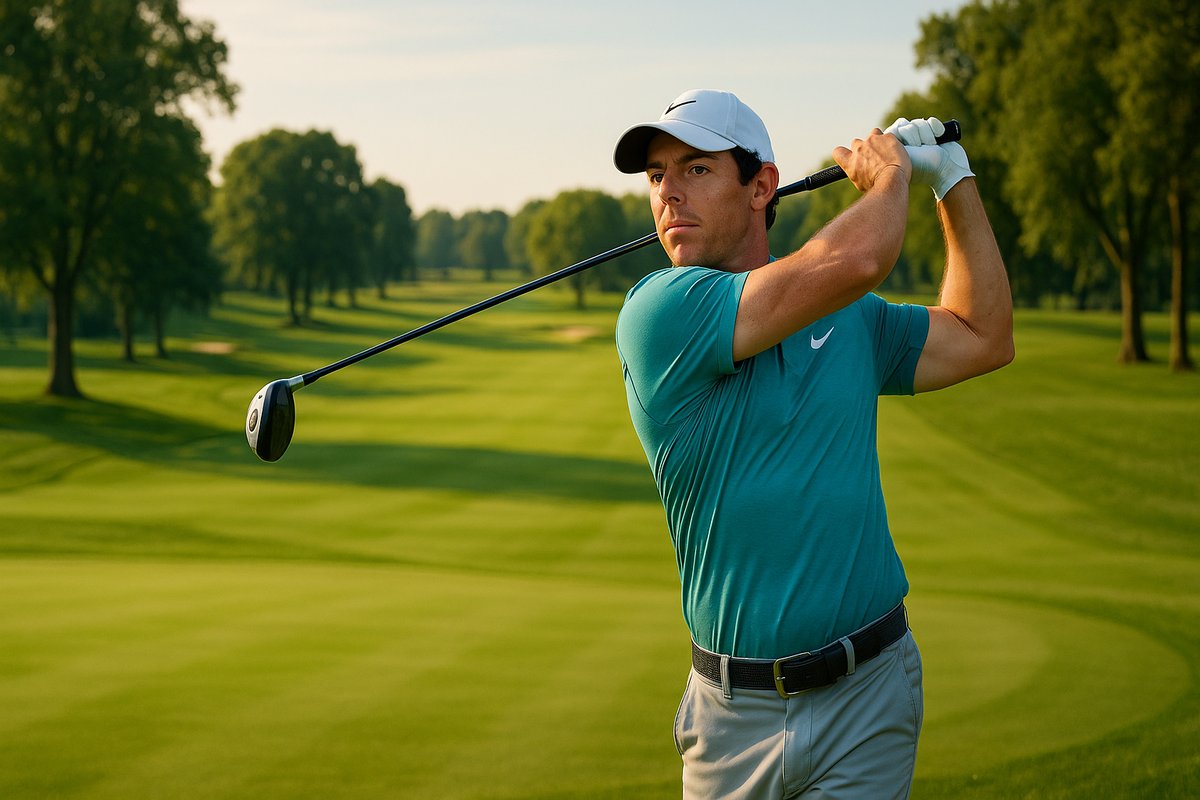
There’s something magical about tracing a player’s journey across the fairways of the world, the way the wind carries stories from one links to another. Rory McIlroy’s story feels like that to me—like wandering through the misty mornings of Northern Ireland and ending up on sun-baked American courses, each step echoing with the crisp snap of a perfectly struck drive. From his early days in Holywood, where he picked up clubs at just two years old and claimed the World Junior Championship at nine, to the seamless move into professional ranks in 2007, his path has always carried that sense of discovery. By 2009 he’d already claimed his first European Tour title at the Dubai Desert Classic, the kind of explosive ball-striking that makes you pause on a foreign tee box and simply breathe in the moment.
When I played courses near those early European stops last spring, the way the ball seemed to hang forever in the air reminded me of how McIlroy burst onto the scene. After turning pro, he quickly claimed a playoff win at the 2010 Quail Hollow Championship. Then came the 2011 U.S. Open, where his final-round 65 left him at 16-under par, rewriting the tournament’s scoring record and lifting him to world number one. That fearless power off the tee mixed with growing short-game touch is something I still think about when the evening light settles over a new course I’ve traveled to.
His major tally tells its own tale of resilience and timing. After that breakthrough U.S. Open came the 2012 PGA Championship at Kiawah Island, won by eight shots, followed by the unforgettable 2014 double: a wire-to-wire Open Championship at Royal Liverpool and another PGA at Valhalla. I’ve stood on similar seaside stretches myself, feeling the salt air and hearing the distant call of gulls, and it brings home how those weeks must have felt—pure command under pressure. Even the near-misses, like the 2011 Masters, have shaped a deeper narrative of mental strength that resonates far beyond scoreboards.
What makes McIlroy’s career arc particularly compelling is how he’s managed expectations at the highest level while continuously adapting his game. The transition from European Tour success to PGA Tour dominance isn’t automatic for most players, yet he integrated seamlessly, establishing himself as a consistent threat in the world’s most competitive circuit. His 2016 season epitomized this versatility—winning the FedExCup that year demonstrated not just tournament victories but sustained excellence across an entire season. The consistency required to finish among the top earners year after year, to maintain focus through injuries and personnel changes, and to remain relevant across two decades of professional golf is something that statistics alone cannot fully capture.
McIlroy’s more than twenty PGA Tour victories, including multiple Arnold Palmer Invitational and RBC Canadian Open titles, along with four FedExCup crowns in 2016, 2019, and 2022, speak to that steady excellence. As someone who follows the LPGA closely, I notice how his rivalries with players like Jon Rahm and Scottie Scheffler have lifted the entire sport, drawing fresh eyes the same way women’s tours create their own Sunday drama. His advocacy for the tour’s direction continues into strong 2023 and 2024 showings, and his Ryder Cup leadership for Europe blends experience with quiet mentorship.
The depth of his game extends beyond raw power, which many casual observers emphasize when discussing his capabilities. McIlroy’s approach play has been refined through countless hours of deliberate practice, allowing him to attack pins from a variety of distances. His iron play, particularly with long irons, often becomes decisive in major championships where precision under pressure separates the contenders from the champions. The ability to flight shots differently, manage spin rates, and shape approaches based on pin position reflects the technical mastery that underpins his sustained success. These aren’t flashy elements that make highlight reels, yet they’re fundamental to winning tournaments at the highest level.
His swing remains a study in efficient power—fast clubhead speed anchored by compact backswing and strong hip rotation. The tips that flow from watching him—stable lower body through impact, visualization in the pre-shot routine—translate beautifully whether you’re on a windswept Scottish links or a tucked-away course in another country. His short-game refinements and fitness focus remind me of the quiet hours spent practicing bunker shots at golden hour, the sand warm underfoot. What’s instructive about his technique is how he’s evolved it over time, working with different coaches to address specific weaknesses while maintaining the core elements that made him formidable. This willingness to refine fundamentals rather than completely overhaul his approach demonstrates the maturity of a truly elite competitor.
McIlroy’s relationship with major championships deserves deeper examination. While four major victories might seem modest compared to some all-time greats, the consistency with which he’s positioned himself in contention cannot be overlooked. He’s finished inside the top ten at majors numerous times, illustrating his ability to compete at the sport’s most demanding venues. The quest for a career Grand Slam—winning all four majors—has become the narrative thread running through his recent seasons. This pursuit adds compelling drama to each major championship, as fans recognize both the difficulty of the achievement and the window of opportunity that exists for even the world’s best players.
Lately he’s balanced injuries with renewed purpose, winning the CJ Cup in 2022 and staying sharp for majors and team events. The chase for a career Grand Slam continues, each round another chapter in a story that keeps inspiring players everywhere. Over twenty PGA Tour wins, four majors, multiple stints at number one, record scoring, and a strong Ryder Cup ledger—these facts hold steady, painting a complete picture of talent meeting tireless work.
McIlroy’s influence extends beyond his own scorecard into the broader conversation about professional golf’s future. His thoughtful perspective on the sport’s direction, whether discussing tournament formats, player compensation, or the evolution of the PGA Tour, reflects a player genuinely invested in golf’s growth. His advocacy hasn’t been without controversy, yet it demonstrates a willingness to engage with the sport’s complex business realities rather than remain aloof from these discussions. This kind of leadership from elite players shapes the sport for generations to come, influencing everything from tournament scheduling to how professional golf is broadcast and consumed globally.
The relationship between McIlroy’s personal life and his professional achievements also humanizes his narrative. His marriage to Erica Stoll, a former PGA Tour employee, and the balance he’s sought between family and the demanding schedule of professional golf, remind us that success at this level involves personal sacrifice and the support systems that enable peak performance. The way he’s managed these dual priorities offers lessons that extend beyond golf into how high-performing individuals across all fields navigate ambition and personal fulfillment.
Whether you’re chasing your own game or simply savoring the journey across new courses, McIlroy’s arc offers that same pull toward the next fairway—a reminder that excellence is built through dedication to craft, resilience in the face of setbacks, and the willingness to keep growing even at the highest levels of competition.