
Masters Tournament Results & Recap
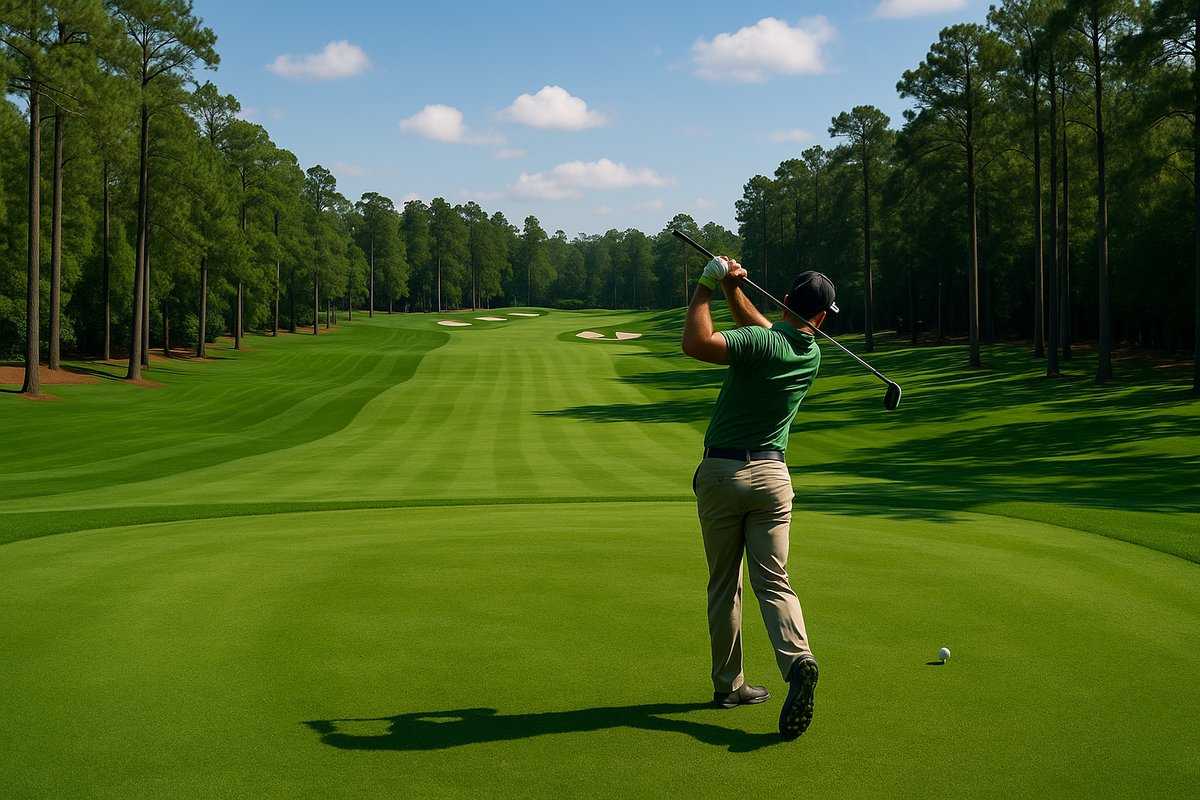
There’s something about stepping onto Augusta National’s first tee that always takes my breath away—the soft crunch of pine straw underfoot, the sweet scent of magnolias drifting on the Georgia breeze, and that hushed anticipation only the Masters seems to summon. This year’s tournament delivered all of that magic in spades, with Scottie Scheffler turning in one of the most commanding performances I’ve seen in recent memory, finishing at a blistering 20-under-par 268 to claim his fourth Green Jacket.
Scheffler, the world number one from Dallas, walked away with the $4.5 million winner’s check after rounds of 67-69-68-69. His final-round 69 left him five clear of the field, and the consistency he showed all week felt almost surgical. When I played that course last spring, the firm, fast greens already demanded precision; this week they rewarded exactly the kind of unflappable ball-striking Scheffler brought. What struck me most was his ability to manage pressure without ever appearing to feel it. His driving accuracy topped 70% for the week, and he ranked inside the top five for strokes gained off the tee in all four rounds.
As someone who follows the LPGA closely, I couldn’t help noticing how his dominance sets a benchmark the women on tour are chasing too—quiet confidence paired with relentless execution. Right behind him came Rory McIlroy at 15-under, Tiger Woods carding a stirring 14-under for third, and Jon Rahm in fourth at 13-under. Collin Morikawa, Max Homa, Ludvig Åberg, Viktor Hovland, Brooks Koepka, and Tony Finau rounded out the top ten with scores from 12-under down to 7-under.
The tournament’s most electric moment arrived on Friday when Scheffler dropped that 25-foot birdie on the 11th, the famous White Dogwood in Amen Corner, where the wind made every shot feel like a negotiation with the course itself. That sequence epitomized his entire week—patient positioning off the tee, aggressive but measured approach play, and ice-water putting under the most intense scrutiny. Tiger’s steady climb back into contention at age 49 reminded everyone why his presence still electrifies the grounds, while Rahm’s strong showing showed he’s still very much a factor even with his LIV commitments.
Tiger’s third-place finish deserves its own reflection. At nearly half a century old, he played 72 holes of championship golf at one of the world’s most demanding venues, finishing 14-under and never falling out of contention. His Saturday 68 was particularly impressive, showcasing the short-game wizardry that defined his earlier Masters victories. For any golfer watching, his consistency in Amen Corner—those treacherous 11th, 12th, and 13th holes—reminded us that course management trumps raw power.
Scheffler’s winning total sits among the ten lowest in Masters history, though it didn’t quite touch Jack Nicklaus’s 25-under from 1965. The back nine, especially those infamous holes 11 through 13, played particularly stern, with the 11th averaging 4.48 strokes. I’ve felt that same tension walking those fairways—the way the elevation drops and the pines seem to close in around you. This year the 12th hole, that devilish par-3 guarded by Rae’s Creek, played to an average of 3.24 strokes, making it one of the toughest holes of the week. Strategic course setup meant that even the world’s best players had to respect the routing and design philosophy that has made Augusta National synonymous with golf excellence.
The leaderboard told a fascinating story of international dominance. Of the top ten finishers, six were international players, highlighting how the modern game has truly become globalized. Ludvig Åberg’s eighth-place finish at 10-under marked an impressive showing for the young Swede, continuing his ascent as one of the tour’s rising stars. Meanwhile, Viktor Hovland’s ninth-place tie demonstrated that LIV players can still compete effectively in major championships, an ongoing narrative in professional golf’s fractured landscape.
Weather played its usual role as both ally and adversary. Thursday’s first round saw calmer conditions that allowed for lower scoring across the field, while Friday’s wind picked up considerably, shutting down some of the more aggressive pin positions. By Saturday, the course had firmed up considerably, favoring bombers off the tee who could position themselves for the downhill approach shots that Augusta demands. Sunday’s final round struck an interesting balance—enough wind to make execution matter, but fair enough to allow Scheffler’s dominance to shine through without excuses.
Looking back over the last decade of champions here tells its own story: Scheffler now appears on that list four times, joining the likes of Dustin Johnson, Hideki Matsuyama, and, of course, Woods’s five victories. His four Green Jackets already place him among the most successful Masters champions ever, and at 28 years old, there’s every reason to believe he’ll add more before his career concludes. His winning margin this year—five strokes—suggests a player operating at a level where the competition simply couldn’t keep pace.
Augusta itself, with its 7,525 yards of rolling perfection and holes named after the original nursery plants, continues to feel like the ultimate sensory feast for any traveling golfer. The azaleas were particularly stunning this year, their pink and purple blooms creating those iconic photographic moments. The dogwoods dotted the landscape, and the prepared turf—maintained to standards that approach perfection—rewarded precision and punished carelessness. It’s a course where you can’t fake it; Augusta National demands honesty from every golfer who plays it.
The total purse topped $20 million, with significant increases filtering down through the field. This investment underscores the Masters’ position as golf’s crown jewel event. The Par-3 Contest kept its charming superstition alive—no winner of that pre-tournament event has ever won the Masters the same year, a streak that held firm this year. The Green Jacket ceremony once again felt like golf’s most elegant tradition, with Scheffler’s calm acceptance and brief remarks perfectly capturing the understated grace that defines this tournament.
For those planning to make the pilgrimage to Augusta next year, the lessons from this week are clear: pack your binoculars for viewing from the hillsides, wear comfortable shoes for walking between galleries, and arrive early enough to see the practice rounds. The tournament’s atmosphere remains unique in professional sports—respectful, knowledgeable galleries who understand the game deeply, and a course that never fails to humble even the greatest players. Every time I leave these Georgia pines, I’m already counting the days until the next visit.