
Scottie Scheffler Rise to World Number One
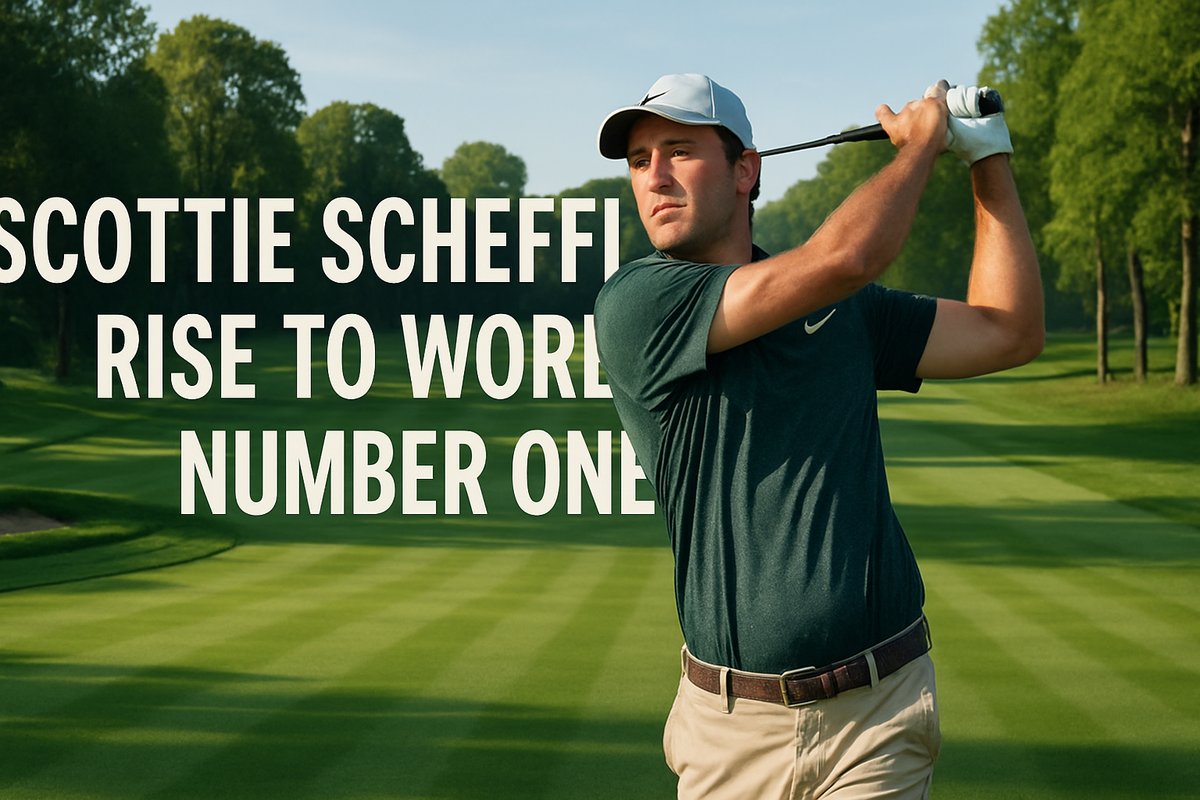
Scottie Scheffler’s climb to world number one is one of those steady, methodical ascents that separates the truly elite from the flash-in-the-pan types on the PGA Tour. From a top amateur who grinded through the fundamentals to a guy who’s now hoisted multiple majors, he’s leaned on ball-striking consistency, a bulletproof mental game, and smart course management to top the Official World Golf Ranking. As a former club pro, I can tell you his story is packed with lessons any player can steal for their own game.
Born in Ridgewood, New Jersey, in 1996 and relocated to Dallas early on, Scheffler got after it young. His parents got him started, and he racked up junior wins while earning a spot on the national team. That early emphasis on grip pressure, posture, and alignment shows up in his pro swing today. I’ve played enough rounds to know short-game work separates the guys who contend from those who just make cuts, and Scheffler drilled that touch from day one.
At the University of Texas he earned three All-American nods, hit the number-one amateur ranking, and took the 2015 NCAA individual title plus a strong run at the Western Amateur. College sharpened his iron play and on-course decisions, the same tools that fueled his rise. Data-driven sessions with launch monitors to dial spin and launch angles became part of the routine, something plenty of serious amateurs copy now.
He turned pro in 2018 after a T15 at the U.S. Open as an amateur, grabbed his PGA Tour card via the Korn Ferry Tour in 2019, and notched his first win at the 2020 Bermuda Championship. Early putting under the gun gave him fits, but deliberate green-reading and distance-control work fixed it. Multiple top-10s built the momentum that exploded in 2022.
That season was the real breakout. Wins at the Arnold Palmer Invitational and WGC-Dell Technologies Match Play showed he could close under pressure, and the Masters at Augusta National sealed it with those clutch irons and a final-round 64. His calm demeanor comes from pre-round visualization, and I’ve seen plenty of players lose tempo when the leaderboard tightens—Scheffler doesn’t. The 2022 Masters validated the work and handed out a tip worth stealing: keep the same swing speed on approaches no matter the heat.
He officially grabbed the world number-one spot on March 27, 2022. The Players Championship and other signature events followed, and in 2024 he added the PGA Championship with tighter driving and steadier putting. It’s a mix of conditioning, mental work, and analytics—strokes-gained tracking in particular—that modern players can copy.
His swing stays compact with solid lower-body stability for repeatable contact. Amateurs can steal weight-transfer drills and alignment-stick work on the range. The putting stroke keeps the face square with almost no wrist break, a move that drops scores for anyone who tries it. Around the greens he plays smart aggression, reading risk the way guys like Justin Thomas do when it matters.
What really separates Scheffler’s approach from the field is his obsessive attention to process over results. While other players obsess over leaderboards and rankings, Scheffler focuses on execution of a pre-shot routine that rarely wavers. He’s spoken in interviews about the importance of having a repeatable process that insulates him from the noise of tournament pressure. His caddie, Ted Scott, deserves credit here too—the veteran looper brought major-championship experience from his years with Phil Mickelson and Adam Scott, and that partnership has been instrumental in Scheffler’s rise. Together they’ve built a system where course management takes priority over aggressive risk-taking, a lesson many young tour pros could stand to learn.
The improvement in his ball-striking since 2021 has been remarkable. His strokes-gained off-the-tee numbers have consistently ranked in the top 5 on tour, and his approach-shot performance rivals anyone playing. What’s particularly striking is his ability to control trajectory and shape his irons with pinpoint precision. Watch him play into Augusta National or Torrey Pines, and you’ll see a player who’s dialed in his distances to the exact yard. That level of control doesn’t come from talent alone—it’s built through thousands of repetitions and detailed feedback from Trackman data.
His 2024 season has been even more dominant than 2022 in some respects. He won his first PGA Championship at Valhalla with a wire-to-wire performance that showed complete mastery. The tournament marked his second major and cemented his status as a generational talent. His scoring average that year dipped below 69 on the PGA Tour, a mark few players have achieved consistently. Wins at signature events like The Players and the Masters again in 2024 showed he wasn’t relying on one hot stretch but rather was sustaining excellence week after week.
The mental resilience angle deserves deeper exploration. Scheffler has spoken about working with sports psychologists to maintain focus and manage the pressure of being ranked number one. Unlike some top players who wilt when facing expectations, Scheffler seems to elevate. His demeanor in the final groups is noticeably calm—no excessive club twirls, no jaw-clenching frustration. He processes bad shots with remarkable equanimity and moves immediately to the next shot. For anyone trying to improve their game, this psychological foundation might matter more than any swing tip.
Another often-overlooked aspect of Scheffler’s game is his adaptability. His swing has evolved slightly since turning pro, becoming more efficient and less mechanical. He’s worked with different instructors and been willing to make adjustments based on what the data shows. This openness to change while maintaining core principles is something that separates players who sustain success from those who plateau. He’s not a one-trick pony relying on a particular strength; instead, he’s continuously refined weaknesses into weapons.
Key numbers tell the tale: number one after just four PGA Tour wins, two majors (2022 Masters and 2024 PGA), over 15 wins by the end of 2024, top-10 finishes in more than half his starts at peak, multiple seasons leading strokes gained: approach the green, a career-low 61 at the 2024 Travelers, PGA Tour Player of the Year in both 2022 and 2024, and more than $60 million in official earnings.
Looking ahead, Scheffler has all the tools to win multiple more majors and dominate for the next decade. His age—still in his late twenties—works in his favor, and his commitment to continuous improvement suggests he won’t be resting on his laurels. If he can stay healthy and maintain the same hunger that got him to number one, there’s no ceiling on what he can accomplish.
Scheffler’s path shows what dedicated, smart practice plus adaptability can do at the highest level. The blueprint is still there for anyone grinding to add shots to their game.