
Rory McIlroy’s Journey From Prodigy to Major Champion
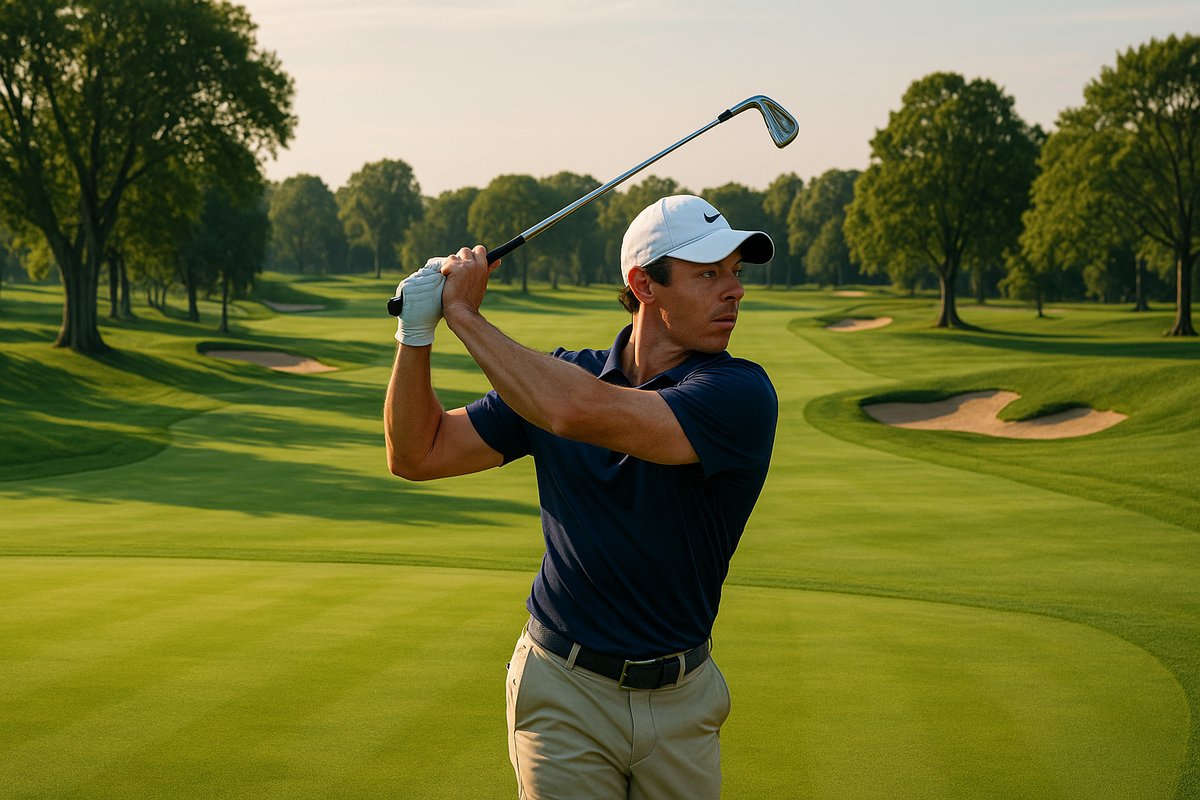
There’s something magnetic about following a golfer whose story unfolds across continents and decades, much like the journeys I’ve taken chasing the game from windswept Irish links to sun-baked American parklands. Rory McIlroy’s path from Northern Ireland prodigy to four-time major champion captures that same blend of raw gift and grit that keeps drawing me back to the fairways, year after year. As someone who follows the LPGA closely, I often spot echoes of his mental toughness in the women who compete week in and week out, where resilience under pressure turns good rounds into legendary ones.
Rory first gripped a club at age two in Holywood, and by nine he was already testing himself against older juniors on local courses. His father juggled jobs to fund those early lessons, building the foundation for a swing that drew instant comparisons to Tiger Woods. By fifteen he was stacking up wins in Irish and European junior events, turning pro in 2007 after claiming the European Amateur Team Championship. Those early coaches drilled home grip pressure and tempo, fundamentals that still echo in the tips I pick up from instructors during my travels. His swift climb through the developmental tours showed the work ethic needed to reach the PGA Tour, a grind I’ve witnessed in players grinding their way up from mini-tours around the world.
He earned his PGA Tour card in 2010 and made an immediate mark with steady top finishes, his powerful driving and aggressive ball-striking setting him apart. The 2011 U.S. Open at Congressional Country Club delivered his breakthrough, an eight-shot victory that still stands as the tournament scoring record. When I played that course last spring, the long, punishing layout reminded me how his combination of distance and iron precision can silence even the toughest tests. He followed with the 2012 PGA Championship at Kiawah Island, plus wins at the Zurich Classic and Wells Fargo Championship. Tips from his game often highlight a wide backswing arc and lower-body stability for that explosive speed, lessons that translate whether you’re chasing a major or simply enjoying a round abroad.
What made that Congressional performance so remarkable was not just the eight-shot margin, but the consistency displayed over seventy-two holes. At just twenty-two years old, McIlroy posted rounds of 69-67-66-68 for a total of 270, demonstrating the kind of controlled aggression that separates champions from contenders. His scoring average during that week was particularly noteworthy in how he managed the course’s demanding rough and firm greens. The victory catapulted him into the conversation as a generational talent alongside Woods, and vindicated years of investment and belief from his support team back in Northern Ireland.
Setbacks tested him, including final-round slips at the 2011 and 2015 Masters, yet he answered with back-to-back majors in 2014—the Open Championship at Royal Liverpool and the PGA Championship at Valhalla—bringing his total to four. Those triumphs cemented his place among his generation’s elite. His Ryder Cup contributions for Europe have been equally stirring, and recent PGA Tour highlights include the 2022 CJ Cup plus strong showings in signature events. Analysts point to his sharpened short game and smarter course management as ongoing evolutions. Aspiring players can draw from his visualization routines and pre-shot routines that keep focus sharp over 72 holes. The sensory pull of those venues—the salt air at Liverpool, the rolling Kentucky hills at Valhalla—always lingers with me long after I’ve packed my clubs.
The 2014 season stands as perhaps McIlroy’s finest year, winning two majors and reaffirming his position at the sport’s pinnacle. At Royal Liverpool, he captured the Open Championship with a three-shot victory, displaying the control and composure needed to navigate links golf’s unpredictable conditions. Just weeks later at Valhalla, he claimed the PGA Championship by one stroke in a dramatic finish that showcased his ability to perform under maximum pressure. These back-to-back victories proved that his earlier major wins were no fluke, but rather the product of a championship mindset developed over years of grinding through amateur and early professional competition.
The Masters, however, has remained elusive for McIlroy. His finishes at Augusta National have ranged from top-five efforts to disappointing final rounds, a reality that keeps driving him forward. The 2011 Masters represented his biggest near-miss, when a final-round 80 derailed what could have been back-to-back major victories following his U.S. Open triumph. That experience taught him valuable lessons about managing expectations and maintaining composure when tournaments slip away—lessons that would serve him well in future championship runs. Many observers believe it’s only a matter of time before he captures a green jacket, adding the final jewel to a complete major championship resume.
McIlroy’s equipment evolution has been fascinating to track over the years. His switch to TaylorMade in 2016 signaled his willingness to explore technical innovations and new equipment partnerships, even at the height of his career. This adaptability speaks to a deeper truth about professional golf: standing still means falling behind. His willingness to work with swing coaches, try different equipment combinations, and adjust his strategy based on course conditions reflects the kind of intellectual curiosity that separates good players from great ones. For amateurs watching his career, this demonstrates that improvement never ends, regardless of your skill level.
Beyond the major championships, McIlroy’s consistency in regular PGA Tour events has been remarkable. His tournament wins, including multiple efforts at the Players Championship and various signature events, showcase his ability to excel across different course types and conditions. He’s won on tight, demanding layouts and on more open, scoring-friendly courses, adapting his game to whatever challenge presents itself. This versatility has kept him relevant and competitive even during years when major championship victories eluded him.
Key facts from his career include turning professional at eighteen in 2007 with his first PGA Tour win coming in 2010 at the Wells Fargo Championship. He has more than twenty PGA Tour victories and over one hundred weeks at world number one. His majors are the 2011 U.S. Open, 2012 PGA Championship, 2014 Open Championship, and 2014 PGA Championship. His lowest 72-hole major score is 268 at that record-setting 2011 U.S. Open. Europe has called on him for seven Ryder Cups with a strong record. At twenty-two he became the youngest world number one since the ranking system began in 1986. His average drive often tops 310 yards. Career PGA Tour earnings exceed seventy-five million dollars. He holds fifteen top-ten major finishes since 2011, and his driver swing speed regularly exceeds 120 mph.
Looking at his Ryder Cup record specifically, McIlroy has been a cornerstone of European success in recent competitions. His record in the event stands among the best of his generation, with several crucial victories in both foursomes and singles matches. The passion he displays wearing the European colors adds another dimension to his competitive character, one that casual observers might miss when watching only his individual tournament performances. His Ryder Cup teammates have consistently praised his leadership qualities and ability to elevate his game in team situations.
The physical demands McIlroy’s swing places on his body cannot be understated. That 120+ mph driver swing speed, combined with the aggressive lower-body rotation needed to generate such velocity, creates significant stress on joints and muscles. Yet McIlroy has managed these demands through dedicated fitness work and smart course management. His off-season conditioning routines are reported to be as rigorous as his on-course practice, reflecting modern golf’s demand for athleticism at the highest levels. For golfers at all levels, his example demonstrates how physical fitness directly translates to better performance and durability.
Rory’s story keeps inspiring golfers everywhere, the mix of power, precision, and quiet determination offering lessons that travel well whether you’re on the PGA Tour, the LPGA, or simply exploring new courses across the globe. His willingness to tweak equipment and swing while staying competitive speaks to the patience the game demands, the kind that turns a single round into a lifelong pursuit. As he enters his late thirties, the question of how many more majors he might capture remains open, with his hunger and competitive fire showing no signs of diminishing.