
Rory McIlroy Career Stats & Biography
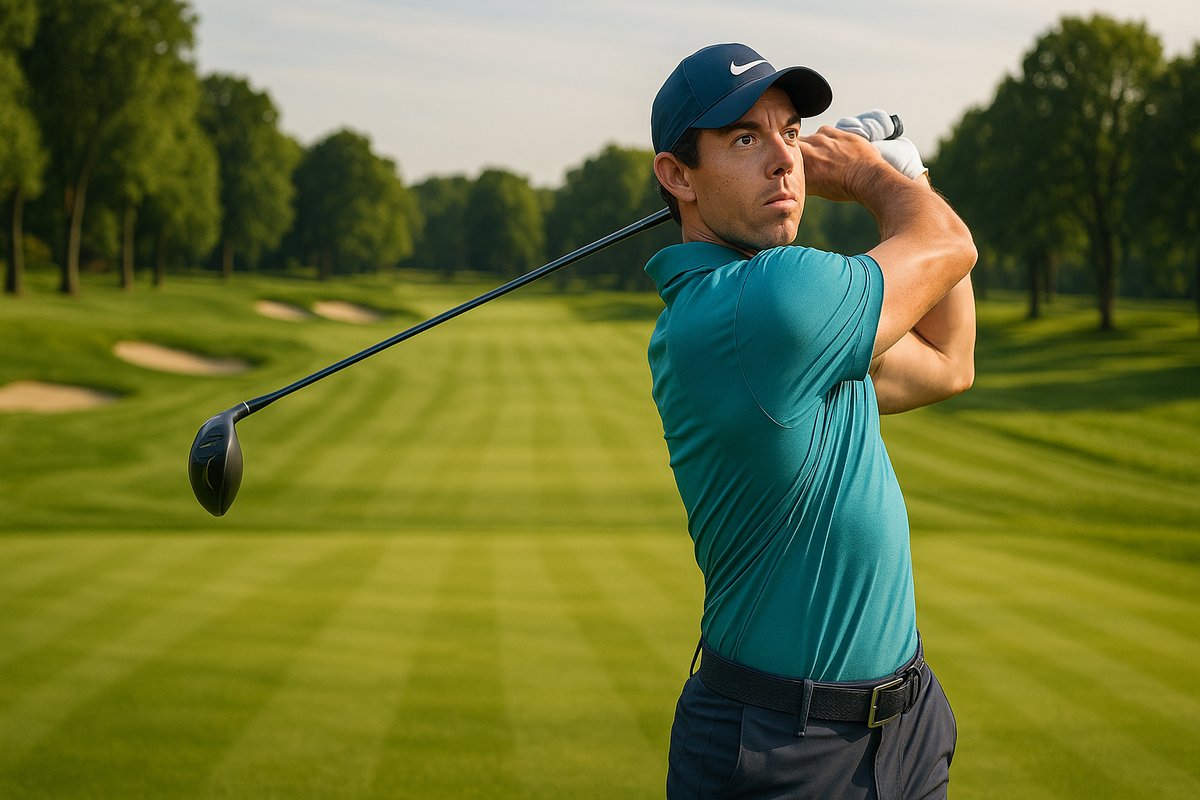
Rory McIlroy has been carving up leaderboards for close to two decades now, and the numbers back it up. Born in Holywood back in ’89, he went pro in 2007 and announced himself with that 16-under romp at the 2011 U.S. Open at Congressional. Since then he’s stacked three more majors on the mantel: the 2014 Open at Royal Liverpool, and a pair of PGA wins in 2016.
Those four jackets break down like this on the scorecard: 268 at Congressional, 271 at Hoylake, 272 at Baltusrol, and 268 at Quail Hollow, with the checks running from $1.44 million up to $2.16 million. As a former club pro, I can tell you watching a kid turn that kind of raw speed into major-winning golf still gives me chills.
Beyond the big ones, Rory’s sitting on 35 PGA Tour wins. That’s the kind of haul that puts him in the conversation with the all-time greats. I’ve played enough rounds to know consistency across every style of track separates the good from the great, and he’s got it. The Players, multiple FedEx Cups, you name it—he’s won on firm-and-fast setups, soft parkland, and everything in between.
His world-ranking stretches tell the same story. He first grabbed the top spot in March 2016 after the Match Play and has logged 243 weeks there overall, including long runs from 2014-2016 and 2017-2019. Even when he dipped, he rarely fell outside the top 10 for any length of time.
Money-wise, the on-course total sits at $137.1 million: $82.5 million from PGA Tour purses, $11.2 million from the majors, $28.4 million from international events, and another $15 million tied to the LIV side of things. Throw in the endorsements—Nike alone pays north of $20 million a year, TaylorMade handles the sticks, and Optum chips in—and his net worth lands around $170 million. Annual sponsor money runs $40-50 million on top of the tournament checks.
Statistically, the kid still bombs it. Average drive sits right around 305 yards with fairway accuracy usually north of 65 percent. From 150-175 yards his iron play keeps GIR numbers above 70 percent, and the scrambling is elite when he misses. That’s why he keeps contending even as the tour landscape shifts.
What makes McIlroy’s career trajectory even more impressive is his consistency in major championships over an extended period. While his major win drought since 2016 has drawn scrutiny from analysts and fans alike, his record shows he’s consistently finished in the top 10 at the sport’s biggest events. Between 2010 and 2020, he posted 19 top-10 finishes in major championships—a stretch that rivals some of the greatest performers in golf history. His ability to compete at the highest level week in and week out speaks to the depth of his game and his mental fortitude under pressure.
The 2019 FedEx Cup victory stands as a career milestone that often gets overlooked in major championship discussions. That season, McIlroy played some of the most complete golf of his career, proving he could string together excellence across an entire season rather than just isolated tournaments. His scoring average that year sat near the top of the tour, and his consistency across all statistical categories—driving, approach shots, and short game—showed why he belongs in conversations about golf’s elite players.
McIlroy’s game has evolved considerably since his breakthrough at Congressional in 2011. Early in his career, he relied heavily on raw power and athleticism to overwhelm competitors. That win saw him finish 16-under at a U.S. Open, which was relatively soft-scoring conditions, but his aggressive approach paid dividends. As he’s matured, his game has become more nuanced. His short game, always respectable, has been refined through work with various coaches. His course management has improved, and he’s learned to navigate pressure situations with greater calm, though the major championship victories haven’t come as frequently as many expected.
The move to LIV Golf in 2022 marked a significant turn in McIlroy’s career narrative. Unlike some of his contemporaries who joined immediately, McIlroy initially resisted the Saudi-backed breakaway tour before eventually becoming a key figure in the eventual merger negotiations between LIV and the PGA Tour. This decision, while sometimes controversial, has allowed him to compete at the highest levels while maintaining significant earning power and global visibility. His involvement with LIV has been characterized by a measured approach, focusing on the business and competitive aspects rather than becoming an ambassador in the way some other players have.
From a technical standpoint, McIlroy’s swing is a masterclass in modern golf mechanics. His backswing features excellent sequencing with minimal early extension, and his transition down is explosive without being overly aggressive. Tour coaches often reference his swing plane and the efficiency of his lower body rotation. At address, his setup looks textbook—neutral grip, good posture, and alignment that allows him to load into his right side and explode through the ball. This technical foundation has allowed him to compete effectively across different eras of equipment and course setups.
His performance in match play events has been particularly notable. McIlroy thrives in head-to-head competition, which might suggest he has the psychological tools needed for major championships, yet the results haven’t matched that expectation in recent years. His Ryder Cup record demonstrates his ability to perform under intense pressure with teammates and crowd expectations factoring in, and he’s been a cornerstone player for European teams.
Key dates on the timeline: turned pro at 18 in 2007, first Euro Tour win in Portugal in 2009, that breakthrough major in 2011, the Open in 2014, the two PGAs in 2016, FedEx Cup in 2019, and still grinding at the top in 2025. Looking ahead, the question isn’t whether McIlroy can still win majors—his recent form proves he can compete with anyone—but whether the specific circumstances will align for another major championship run.
He’s not slowing down. The hunger’s still there, and I’ve seen enough careers to know that’s what keeps a player adding to the legacy when the young guns start coming. At his core, McIlroy remains one of the most talented ball strikers on the planet, and in golf, talent plus desire equals opportunity. Whether he adds to that major championship total will be one of the more compelling storylines to follow in professional golf over the next several years.